Connecting energies
Regulatory compliance
About our solution
Regulatory compliance
We manage regulatory compliance end to end: strategic reserves (CSO), biofuel certificates, biomethane, and CAES. We define requirements, prepare documentation, and meet deadlines through traceable, auditable processes.
Areas
Areas of
Regulatory Compliance
Thanks to our experience, we add value by offering the best
market opportunities within the most competitive time windows.
As a result, we provide liquidity and market information in:
(CSOS)
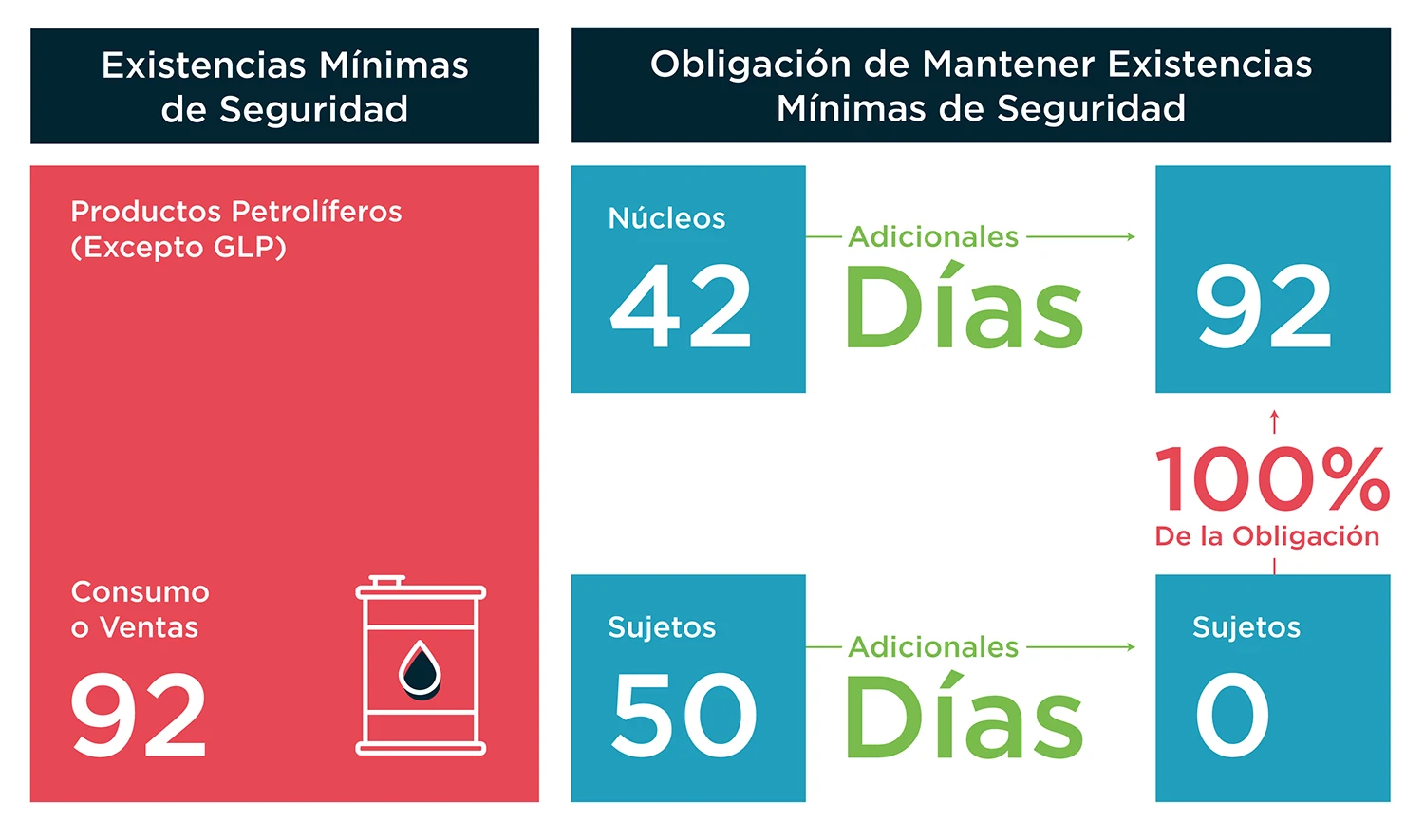
We work with the most competitive operators to offer the best market prices for CSOS (Strategic Reserves certificates) to comply with CORES’ 50-day obligation.
We operate both domestically and internationally with countries with which Spain has agreements in place, allowing up to 40% of the 50-day strategic reserves requirement to be covered.
We connect the best opportunities in both the primary and secondary markets between delegated and obligated entities within the most competitive timings.
Primary Market (Energy Savings)
Direct opportunities within the residential and industrial sectors, where we have delivered energy savings for delegated entities.
Secondary Market (CAES)
We work with the most competitive delegated entity in the Spanish market, thereby offering the most competitive €/MWh prices, as well as flexibility for obligated entities.
At Overseas Energies, we contribute to compliance with regulations on the reduction of emissions in energy content (RED II) and greenhouse gases (FQD).
We adapt to each client’s needs based on the type of certification required to comply with SICBIOS.
Type A Certificates (CTA): Two CTA are issued for each toe of biofuel sold or consumed, produced from raw materials listed in Part A of Annex I of Royal Decree 376/2022 (advanced double counting), and they also contribute to achieving the target set out in Article 2.4 of Royal Decree 1085/2015.
Type B Certificates (CTB): Two CTB are issued for each toe of biofuel sold or consumed, produced from raw materials listed in Part B of Annex I of Royal Decree 376/2022 (limited double counting). They are subject to the limits set out in Article 2.3 quater of Royal Decree 1085/2015.
Type C Certificates (CTC): One CTC is issued for each toe of biofuel sold or consumed, produced from raw materials derived from food and feed crops, excluding those with a high risk of ILUC. They are subject to the limits established by Order TED/1342/2022.
Type C-ILUC Certificates (CTCI): One CTCI is issued for each toe of biofuel sold or consumed, produced from raw materials listed in the Resolution of 29 December 2021 of the Secretary of State for Energy. They are subject to the limits established by said Resolution, Article 9 of the Draft Order, and Order TED/1342/2022.
Certificados del tipo D (CTD): Se expide un CTC por cada tep de biocarburante vendido o consumido, producido a partir de materias primas de cómputo simple.
Type E Certificates (CTE): From 2025 onwards, two CTE will be issued for each toe of renewable fuel of non-biological origin obtained as an intermediate product in the production of conventional fuels. It must comply with the criteria set out in Article 11.2 of the Draft Order.
Within the framework of the European Renewable Energy Directive (RED III), biomethane is consolidating as a key decarbonization tool for sectors that are difficult to electrify, such as the maritime and oil sectors.
Value for the maritime industry
Biomethane can be used in the form of bio-LNG in vessels equipped with gas or dual-fuel engines, offering:
- Reductions of up to 90–100% CO₂ on a life-cycle analysis basis.
- Compatibility with existing LNG fleets and infrastructure.
- An immediate solution to meet regulatory targets without waiting for still-immature technologies.
Opportunity for the oil sector
For the oil and energy sectors, biomethane represents:
- A pathway for diversification towards low-carbon fuels.
- Integration of renewable solutions within already established supply chains.
- Development of new business models based on certified fuels, blending, and supply to ports and maritime clients.
- Leveraging existing assets (logistics, storage, marketing) in an increasingly demanding regulatory environment.
Contacta con nosotros
Tienes alguna pregunta?
Rellena el formulario o contacta directamente con nuestros datos de contacto.